Doreen Massey: Reimagining Place
- Tabar Smith
- Jun 15
- 12 min read


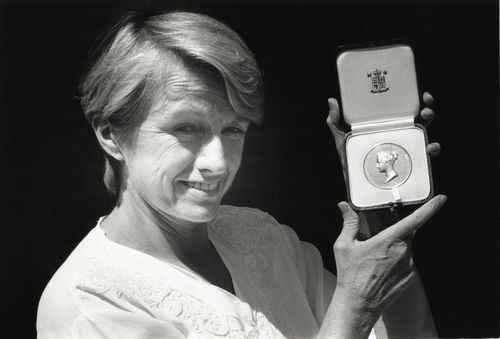
Doreen Massey
1944-2016
"Doreen Massey, emeritus professor of geography at The Open University, and one of the major figures in twentieth-century geography, passed away suddenly on March 11, 2016, at the age of 72. She was one of the most influential thinkers on the left, and her work on space, place and power has been recognized all over the world." (source)
For a more complete biography of Massey, I recommend her memorials from the American Association of Geographers and from The Open University.
Since my first encounter with Massey's "immigrant rocks," I was hooked. She presents a perspective on place that is essential in navigating our way through the pervasive division and conflict of today (or has it always been this way?). It is a perspective that reveals place as fluid and shifting, as new forces come and go, new experiences are made, new perspectives are shared and perceived, and new conflicts arise. Massey's works are built from a recognition of every human and more-than-human who occupies space and a consideration for their otherness. To me, Massey is the quintessential place-conscious scholar whom all literacy educators should be required to study. In turn, they can teach their students from the tomes of Massey, to cultivate a global sense of place in their classrooms, which will then ripple outward to our world.
Following, I review five of Massey’s chapters from different books as a way to introduce you to the beauty and awe that is Massey’s work. I don’t present these chapters in chronological or alphabetical order, but rather, they are presented to show her ideas flowing from one to the next. Let's begin.
Select Readings of Doreen Massey: A Review

For Space: “The Elusiveness of Place”
Two themes within Massey’s “The Elusiveness of Place” stick out to me: place as fluid and place as continuously co-created.
Place as fluid
Our sense of place is often one of permanence, refuge, belonging, and grounding. Yet no such fixed place exists. Our sense of belonging to a fixed reality is a false security because place is never the same. It changes moment-by-moment as new forces interject themselves into space and others leave: “Then ‘here’ is no more (and no less) than our encounter, and what is made of it. It is irretrievably here and now. It won’t be the same ‘here’ when it is no longer now” (139). Within our natural world, what seems immutable isn’t: mountains, oceans, continents. These all shift with tectonic forces, geological events, weather, and even a wandering foot or hoof.
Immigrant rocks: the rocks of Skiddaw are immigrant rocks, just passing through here… and changing all the while… If we can’t go ‘back’ home, in the sense that it will have moved on from where we left it, then no more, and in the same sense, can we… go back to nature. It too is moving on. (137)
We seek solace and a sense of security in place, but that solace and security that we experienced in place at one moment will never exist again. We cannot escape to something that no longer is. We cannot belong to a place that is stable. Everything is fluid, constantly fluctuating: “If there are no fixed points then where is here… returns are always to a place that has moved on… weaving a process of space-time” (139).
Place as continuously co-created
Not only is place fluid, but each moment, each experience of place is co-created by all forces engaged in that very space. These forces perpetually enter and exit without pause.
… the event of place in part in the simple sense of coming together of the previously unrelated, a constellation of processes rather than a thing… ‘“Thinking conjuncturally’ suggests a shuttling back and forth between different temporal frames or scales to capture the distinctive character of processes which appear to inhabit the “same” moment in time’... (141)
Thus, place is never created independently. It is co-created among humans and more-than-human others: the flora, fauna, and abiotic factors (but are these really non-living?). And since place is co-created, we each have an ethical responsibility to act for the good of other occupants inhabiting space in that moment and in the future:
…in the lives of human others, and in our relations with nonhumans they ask how shall we respond to our temporary meeting-up with these particular rocks and stones and trees. They require that… we confront the challenge of the negotiation of multiplicity. (141)
Place is layered, impacted by each past, present, and future remaking: “Layers as accretions of meetings” (139). And none of us owns a place or can claim any more knowledge of a place in the current moment because we have co-created that moment.
We benefit from previous experiences, ways of being, and ways of knowing, but none of us can ever truly be indigenous to that exact moment and experience of place.
(So what is indigenous here?) (138)
Because place is a layered experience of past, present, and future moments, none of us can claim we have more knowledge of a place. Each conjuncture that creates places also creates the need for a new action, a new ethic, a new way to cohabitate.
Massey’s perspective in this chapter can be unsettling because she strips us of the security and refuge of place. But her perspective can also be freeing. Because none of us are ever fully accountable for or autonomous creators of place, we are unfettered from our need to possess it. We are free to see the beauty in co-existence, in chaos, and in the very moment as we live it.

For Space: “Throwntogetherness: The Politics of the Event of Place”
Massey opens this chapter with a return to immigrant rocks, this time focusing on a massive boulder discovered in the river Elbe, where the German city of Hamburg opens to the sea:
But this celebrated resident of the city turned out to be an immigrant… pushed south by the ice thousands of years ago and left here as the ice retreated. By no means, then, a 'local' boulder. (149)
Within the context of immigrant rocks, Massey ponders what is local and how long one must reside in a place to be considered local. Hamburg embraced its monolith as an honorary local citizen, but like much of the world, its laws of human citizenship were less welcoming. As a challenge to these laws of citizenship, Hamburg’s official for foreign immigrants, Ulla Neumann, leveraged the excitement around the boulder to appeal to the city’s citizens. She asked them to reimagine what it means to be a local; to reimagine place as a “constellation of trajectories” that requires a constant negotiation of belonging. Massey describes Neumann’s challenge:
… to urge an understanding of this place as permeable, to provoke a living of place as a constellation of trajectories, both 'natural' and 'cultural', where if even the rocks are on the move the question must be posed as to what can be claimed as belonging; where, at the least, the question of belonging needs to be framed in a new way. (149)
This reimagining of belonging, determining inclusive ways to coexist in the face of conflicting perspectives, is the essence of this chapter. Massey again defines place as a constantly negotiated reality. Place is born of the heterogeneous social interactions that create it; the coming and going of inhabitants that reshape it and challenge ideas of belonging to it; and the conflicting visions of how it should function. Because place is a constant negotiation, it is also a space of conflict, which Massey asserts, requires a “need for judgement, learning, improvisation…” and “the necessity for the political” (162). Neumann’s appeal to reimagine citizenship is an example of the “necessity for the political.” It is a challenge to the conflict that positions some inhabitants as privileged and belonging — human or more-than-human (a boulder is more privileged than migrant humans) — and others as oppressed and foreign.
This conflict of belonging is visible in places, both privately and publicly funded, that, upon our entry, require us to ask whether we have the right to be there (does a single woman have the right to safely walk through inner-city streets at night on her way home from work?). This conflict can also be perceived in an economic sense of place, where large cities are places of extreme wealth and, at the same time, centers of extreme poverty. To provide access to place, to address disparity of place, we seek some sort of rules of coexistence, some sort of political regulation to even the playing field:
… space, unregulated, leaves a heterogeneous urban population to work out for itself who really is going to have the right to be there. All spaces are socially regulated in some way, if not by explicit rules (no ball games, no loitering) then by the potentially more competitive (more market-like?) regulation which exists in the absence of explicit (collective? public? democratic? autocratic?) controls. (152)
Whatever regulations exist, they can never be rigid if they are to be successful. They must bend and respond to negotiate place in the moment, consider the needs of all who occupy it, and navigate the disparate visions of what it should be.
The negotiation will always be an invention; there will be need for judgement, learning, improvisation; there will be no simply portable rules. Rather it is the unique, the emergence of the conflictual new, which throws up the necessity for the political. (162)
In true Massey form, there isn’t ever a finality to place. Rather, place is “a continually receding horizon of the open-minded-space-to-come, which will not ever be reached but must constantly be worked towards” (153). Massey is reminding us that nothing is ever final, fully formed, or fully as envisioned. Place constantly shifts depending on its inhabitants and the events in that moment. Place is made of social relations and conflict. Place is chaos. To exist in chaos, we must develop skills to navigate and negotiate our way through it indefinitely.

Space, Place, and Gender: “A Global Sense of Place”
Massey describes how the world is becoming globalized in the early 1990’s. As I read this chapter from my globalized perspective in 2026, I am intrigued to find that we are still grappling with the same questions and challenges of globalization. Our technology is different, our politics have shifted, and our ways of living (how we dress, the architecture of our buildings, how we shop) look different. Yet we are still grappling with the notion of place as a sense of belonging and refuge. In the face of living in a globally connected world, we are still grasping at a unique identity steeped in place:
How, in the face of all this movement and intermixing, can we retain any sense of a local place and its particularity? An (idealized) notion of an era when places were (supposedly) inhabited by coherent and homogeneous communities is set against the current fragmentation and disruption. The counterposition is anyway dubious, of course; 'place' and 'community' have only rarely been coterminous. But the occasional longing for such coherence is none the less a sign of the geographical fragmentation, the spatial disruption, of our times. (146-7).
Again, Massey highlights our innate desire to belong, and sometimes this desire is so strong that we do everything in our power to shut out those whom we perceive as other.
And occasionally, too, it has been part of what has given rise to defensive and reactionary responses - certain forms of nationalism, sentimentalized recovering of sanitized 'heritages', and outright antagonism to newcomers and 'outsiders'. (147)
But, she asks us, much like Neumann asked the citizens of Hamburg, to reimagine place as a shared world that is “progressive; not self-enclosing and defensive, but outward-looking” (147). Yes, by clinging to locality, we are (justifiably) reacting to the unsettling of place. This unsettling stems from the global world interjecting itself into our local lives — easy access to foreign food and diverse cultural goods, and the neoliberal ethic of nonstop doing, consuming, and optimizing.
… people desperately need a bit of peace and quiet- and that a strong sense of place, of locality, can form one kind of refuge from the hubbub. So the search after the 'real' meanings of places, the unearthing of heritages and so forth, is interpreted as being, in part, a response to desire for fixity and for security of identity in the middle of all the movement and change. A 'sense of place', of rootedness, can provide - in this form and on this interpretation - stability and a source of unproblematical identity. (152)
But this grasping at stability, at locality, is problematic. It returns us to the false belief “that places have single, essential, identities,” rather than understanding that such identities are “constructed out of an introverted, inward-looking…” (152) perspective. Yet, when we reimagine place as a “meeting and weaving together at a particular locus” (153), we open ourselves up to possibility, not as limited to physical geography, but as a network of relationships, communication, conflict, negotiation, and cooperation. This reimagining
… allows a sense of place which is extroverted, which includes a consciousness of its links with the wider world, which integrates in a positive way the global and the local. (153)
Again, we must perceive of place as constantly reshaped by the “constellation of trajectories” at a given moment, boundary-less, and inclusive of heterogeneous inhabitants.
Massey concludes this chapter by proposing the cultivation of “a global sense of the local, a global sense of place” (157). But to accept this proposal, we must look beyond what is comfortable, what is known, and embrace otherness.

The Doreen Massey Reader: “The Geography of Power (2000)"
Carrying forward the theme of globalization, I’m struck by the parallels between the turn-of-the-century rhetoric and today’s rhetoric of inevitability. Massey asserts that the rhetoric of globalization as market-driven, competitive, and dividing is being driven by a neoliberal empire that is “overwhelmingly concerned with the economic” (192). Today, this rhetoric of inevitability comes from a dominant technocrat empire that grossly benefits from the exponential growth of AI. Thus, Massey asserts, “What is really at issue is the geography of power” (193). She illustrates this concept of power with the wide-spread implications of a free-trade market, in which a more powerful nation, for the sake of its own success, blunts a less powerful nations’ participation in the market.
… resistance to free trade… by a First World country and its trade unions to protect a declining sector (textiles and clothing, say) against imports from a Third World country for which this is the most promising route for development – if the First World country would open up. (193)
We can challenge this geography of power when we understand that our future is not pre-determined by it. When we recognized that our future — just like place — is born from a constellation of space, culture, and society, we are more inclined to work towards a different kind of globalization that leads to connection and symbiosis, rather than parasitic and violent division.
… surely we want a kind of globalisation? … that respects local differences and the possibility of certain kinds of local action, yes; but emphatically not a localist future of hermetically sealed countries or cultures… ‘globalisation’ really just means global connectedness… we need to wrest back the term for ourselves and argue for and imagine not the local rather than the global, but an alternative form of globalisation. (192)
Our fates are not sealed, nor are the rhetorics of inevitability anything more than verbal fodder. When we learn “to talk across difference in an interconnected world” as “one step towards imagining an alternative form of globalisation” (196), we can reclaim our power and reimagine our futures.
The Doreen Massey Reader: “Globalisation: what does it mean for geography? (2002)”
Even though this chapter was published two years after the preceding chapter, they seem to me to be a singular piece. Massey immediately picks up where she left off, discussing the inevitability myth of neoliberal globalization. But it is a myth in the making when we allow it to persist: “This is not a description of the world as it is, so much as an image in which the world is being made” (197). Each place, each moment, is formed and reformed; thus, we always have within reach the potential to shape our own futures. The future doesn’t have to inevitably succumb to a dominant rhetoric.
To be builders of future places, Massey asserts, we must know and perceive of place as geographers do.
No longer do we think of place – or region, or nation – as simply bounded territories with ‘eternal’ ‘essential’ characteristics which somehow grow out of the soil. Rather… understanding the identity of place as the product also of its relations with elsewhere… setting it in the context of its relations with the world beyond. This is place as meeting place: different stories coming together and… becoming entangled. This is the thrown-togetherness… and it is even more marked in an age of globalisation. ‘A global sense of place.’ (199)
This global sense of place will never be harmonious or homogeneous. It will always be a collision of identities, cultures, values, needs, and even include the more-than-human. And we should not seek to create a place of hegemony; rather, we must accept, seek to understand, and even respect difference: “Because a healthy democracy requires, not pacification into conformity, but an open recognition of difference, and an ability to negotiate it with mutual respect” (199). Besides, what other choice do we have? We are so interconnected. Our food, our clothing, our material infrastructure, and our cultural identities rarely come from the local. Instead, these material goods, along with our heritage, come from across the country or across the world. We must conceive of our dinner table as a global meeting place, where our meal is provided by a farmer somewhere across the world. We must acknowledge that their labor feeds our family, and we should be grateful.
Could we not consider a different geography of care and responsibility? … Specifically we could open up a bit more the question of (the possibility of) responsibility and care at a distance. (201)
We must learn to accept, respect, and appreciate every inhabitant that occupies our world. As a global society, we are interdependent, and we are responsible for the care of each other.
As educators, as caretakers, as coworkers, as everyday citizens, we must challenge the desire to separate into homogenous groups. We must seek out differences to understand them. We must grow our skills in respectfully negotiating conflicts. We must perceive of place as the collision of local trajectories, reforming into a global, beautiful mess of interconnectedness.

Comments