New Perspectives: Reclamation Through a Place-Conscious Practice
- Tabar Smith
- Jun 26
- 18 min read

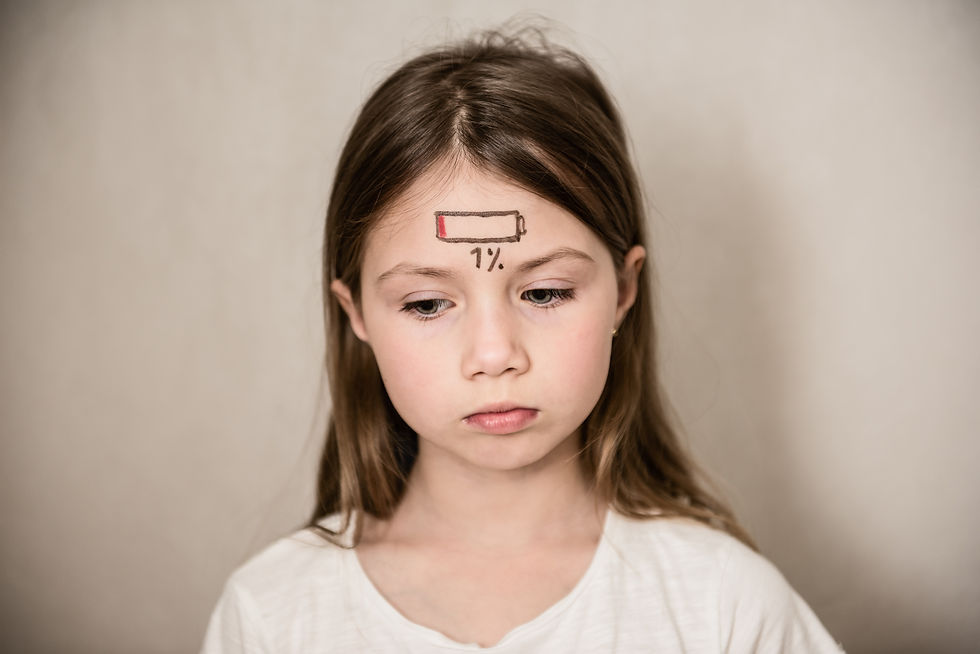
Have you ever felt like the drained red battery icon is lit up on your forehead, signaling “charge me NOW”? In today’s nonstop world of doing, consuming, optimizing, and competing, how can we not always feel drained? Replenishment is a luxury, as is having time to be truly present, to notice, and to be curious.
I know how it feels because I’ve lived it. Working in a culture where I’m just another cog in the machine, easily replaceable. Working so hard to prove my value, but never having it recognized. Never being seen as talented or special because I didn’t play the political game necessary to get ahead. Needing to take a six-month leave of absence because I was completely burnt out.
There’s a symbolic violence to this way of living.
Bourdieu and Passeron’s theory of symbolic violence holds a complicit and complacent society accountable for perpetuating oppressive dominant power. As expertly explained by Bélisle-Pipon, symbolic violence is “a form of domination that is subtle and often imperceptible, yet profoundly effective in maintaining social hierarchies” (2). Symbolic violence is not exerted as brute, physical force, but instead “operates through the imposition of meanings that are accepted as legitimate, even by those who are subordinated by them” (2). Thus, the dominant group’s values are entrenched within society and adopted as truth, shaping society’s “understanding of the world” (2). Bélisle-Pipon concludes that “[s]uch symbolic violence allows dominant groups [to] perpetuate their power without overt coercion, by making their worldview appear natural and inevitable” (3).
In maintaining our nonstop pace of life, we are submitting to a dominant neoliberal ideology of work more, consume more, outperform, overextend, do better, and so on. Through our participation in this (inescapable?) pattern, we perpetuate the symbolic violence that feasts on consumerism, economic success, and power, leaving only the table scraps to nourish social and ecojustice, cooperation, connection, and humanity.
This way of living — this symbolic violence — doesn’t have to be an inevitability.
Over the last six weeks, I’ve been studying critical place-conscious pedagogy. As with all critical literacy pedagogies that I’ve encountered, place-conscious pedagogy is a platform for creating deeper learning engagement; cultivating a sense of identity and belonging; and navigating conflict. When practiced critically, place-conscious pedagogy can develop inclusive and expansive perspectives.
So with this post, I weave together the insights I’ve gained over the last six weeks to position critical place-conscious pedagogy as a platform for reclamation.

A platform for deeper learning engagement
People often ask me why I, a technical writer in Big Tech, am pursuing a master’s degree in English Education. Do I want to become a teacher? I don’t really know the answer. I don’t think I want to become a teacher in the traditional sense, although at times, I’m intrigued by the fulfillment teachers must experience when they succeed in connecting with a student or a classroom. What I do know, though, is that I’m pursuing this degree because I want to think deeply about our current global challenges, I want to create work that is generative and meaningful, and I want to be engaged with the work I do.
During my study of place-conscious pedagogy, Freire’s maxim of “reading the word and the world” kept coming up. I had never read Freire’s full excerpt, however, so I went searching for it and am including (most) of it here:
Reading the world always precedes reading the word, and reading the word implies continually reading the world… this movement from the world to the word and from the word to the world is always present; even the spoken word flows from our reading of the world…and… reading the word is not preceded merely by reading the world, but by a certain form of writing it or re-wrìting it, that is, of transforming it by means of conscious practical work. For me, this dynamic movement is central to the literacy process. (Freire and Slover 10)
Freire’s description of this process captures the essence of how critical literacy engages us in learning. Before we begin to read text, we learn to perceive and make sense of our experiences in the world. Then, as we learn to read, we are introduced to new ideas that reform our understanding of our experiences. At the same time, our existing knowledge affects how we make sense of the text we read. And through writing, we articulate and communicate our perspectives, reforming and refining them even further as we compose. Critical literacy engages us deeply with learning.
Yet, when we look at modern-day education through a lens of critical pedagogy, we become aware of the symbolic violence it perpetuates by diminishing such learning engagement.
Beginning in early elementary school, students are trained to view their own cultural heritage, lived experiences, and tacit knowledge as inferior to institutionalized knowledge and ideologies. Furthermore, modern-day education has become a program of standardization, as Gregory A. Smith, associate professor in the Graduate School of Education at Lewis & Clark College, describes:
... the disconnection between children's lived experience and school learning has only been exacerbated by our national preoccupation with standardized test scores. In fundamental ways, our instructional and curricular decisions and practices violate the way our species learned how to negotiate the world prior to the Industrial Revolution. (Smith 586)
Behind this obsession with standardized test scores is the desire to advance the economic growth and competitiveness of nations. As Gruenewald so aptly describes in prefacing his critical pedagogy of place, the educational institution’s vision is one of “individualistic and nationalistic competition in the global economy and that an educational competition of winners and losers is in the best interest of public life in a diverse society” (3). Sharing Gruenewald’s sentiment, Australian educational researchers, McInerney et al., argue that classrooms no longer train students for “the social and cultural advancement of society,” but for the benefit of global economies (6). In short, we have turned our classrooms into factories of zombification. Schools rebuild students into economy-driving workhorses, retraining them on the institutionalized knowledge of schools, while convincing them that their own personal knowledge is secondary. Biologist Gary Nabhan describes such institutionalization as “a crime of deception - convincing people that their own visceral experience of the world hardly matters, and that pre-digested images hold more truth than the simplest time-tried oral tradition” (Smith 586). This crime is, of course, emblematic of the perpetuation of oppressive power. It’s what robs students of motivation to engage deeply with learning.
Critical place-conscious learning counters this mandated, standardized curriculum and returns curiosity and discovery to the classroom, as described by educational researcher Barbara Comber. Comber asserts that we can cultivate curiosity, discovery, and meaning-making when we reconceptualize our learning communities as places of experiential, historical, and cultural constellations.
Children learn about spaces and places, from spaces and places, in spaces and places, and in the process learn about their obligations for the care of spaces and places. Massey’s (2005) notion of throwntogetherness provides a dynamic way of conceptualizing classroom spaces—spaces that must be negotiated, that are always under development, always about the meeting of people on their various trajectories: teachers, students, parents and communities. If space and place become the focus of learning, rather than seen as background, the school can become a genuine meeting place, where teachers and students work together to learn more about its populations, history, ecology, architecture and so on. ( Comber 96)
When we encourage all participants in a learning community to see their own and others’ knowledge as valid, we develop an environment rich in opportunities to engage deeply in discovery and meaning-making.
Such engagement is illustrated in Smith’s recounting of Southern Texas teacher Francisco Guajardo. Guajardo recognized that the school district’s mandated curriculum would lead to his students’ disengagement. So, he challenged his students to create their own curriculum using their heritage and lived experience as the subject. Because the students were held responsible for developing a more relevant learning experience, they became more invested. And, ultimately, they were more successful in their educational endeavors than past generations of students trained on the state-mandated curriculum (587). But even more importantly, through deep engagement with their learning experience, these students recognized the legitimacy and power of their personal knowledge. They learned that their ideas outmatched those of a detached, mandated curriculum.

A platform for identity and belonging
At the end of my junior year in high school, I applied to be a peer counselor. My school counselor, Mr. Williams, ran the program, and I had a good relationship with him. I felt that he recognized my tenuous position within the social world of teenagers and the isolation I experienced because of it — always on the edge of the in-crowd at my school, often seen as aloof or a snob, when in reality, I was shy and insecure.
The application process to be a peer counselor consisted of a written statement and feedback from teachers and peers. I was a good student, well-regarded by my teachers, and although I wasn’t quite part of the in-crowd, I thought I was liked well enough by my peers. So, I felt good about my chances of being selected. At the end of the process, Mr. Williams ceremoniously announced the names of the chosen twelve over the school intercom.
On that fateful afternoon, I had butterflies in my stomach. As Mr. Williams read the names, one by one, those butterflies turned to lead. My name was never called. It was another affirmation that I didn’t belong.
Place-conscious pedagogy enables learners to develop their own identity within a communal space of learning. It also fosters a community identity of shared agency, responsibility, and ownership. Through these learning identities, students can cultivate a sense of belonging. Bonny Norton, a professor of Language and Literacy Education, describes how students develop their identities within the context of learning communities, as
… the way a person understands his or her relationship to the world, how that relationship is structured across time and space, and how the person understands possibilities for the future. (4)
Because they are positioned as researchers and creators, students of place-conscious education grow their confidence as knowledge-makers, both individually and collectively. However, Comber points out that a sense of belonging should never be assumed:
Schooling in every sense forces the practicing of place, or the embodied negotiation of different people with different interests and histories in often crowded and nonpreferred spaces for extended periods of time (see Dixon, 2011). Nevertheless, it is crucial for children’s learning that they do find ways of belonging at school. (Comber 40)
Comber goes on to discuss how learning communities must be intentionally cultivated as places of belonging. Coining the phrase, “pedagogies of belonging” (40), Comber describes this curricular approach:
Making place, such as the classroom, home and neighborhood, the object of study can position all children as researchers. This can enable learning and allow access to rich resources for representation. When teachers focus on the social relationships of classroom spaces and help all learners to achieve a sense of belonging, children can work together to achieve the kind of justice… where everyone is responsible for ensuring that everyone learns. The motivation in such classrooms is not based on competitive individualism but on collective responsibility. (33)
Throughout her book, Comber provides multiple examples of teachers who have expertly cultivated learner identities through communal learning projects. These community-based projects give learners a sense of belonging; they position students “as inquirers, as researchers who want to build deep knowledge about things that matter to them and to their communities and who wish to share with others” (43). These projects also challenge students to meet the high expectations of being the producers of learning artifacts. This onus of meeting such high expectations is shared among all learners within the learning community, though, creating a sense of belonging, responsibility, ownership, and pride in their contributions.
They learn a great deal from composing together and the artifacts they produce are often more ambitious than they might accomplish alone. In this context, students become both independently literate but also interdependently literate. (115)
As students develop their learner identities and sense of belonging, they also grow a sense of agency to contribute to the well-being of their community. Smith discusses programs that induct students into community projects, whether providing input for the development of new public playgrounds (592), lobbying to have clean air mandates enforced in lower socio-economic neighborhoods (593), or detecting red tides in fishing waters (594). Smith claims that “these activities help students learn and do things that contribute to the well-being of others” (594). He goes on to discuss that a place-conscious curriculum places students as valid and valuable contributors to their communities:
… children have so few opportunities to give back to others in ways that validate their own existence… Efforts to induct students into their communities in a manner that allows them to perform important tasks or to share their perspectives about local issues can… solidify the relationship between children and the places where they grow up, establishing the bonds essential to both the care and the long-term sustainability of people's home communities. (593)
My favorite teacher, Mrs. Carochi, sponsored the high school newspaper, and in my senior year, she named me editor-in-chief. After my rejection from peer counseling, this was the lifeline I desperately needed. But I was afraid that my fellow newspaper classmates also would reject me as their leader. Mrs. Carochi recognized my insecurity, my desperate need for my classmates' approval, so she guided me in creating a community of collaboration. She recommended that my first task should be to hold a team meeting, giving each person a chance to name the section of the paper they most wanted to work on or even lead. This meeting was contentious at times, as different opinions and perspectives collided. Somehow, we negotiated our way through it, some of us giving more ground than others, but in turn, gaining a bit of ground.
After that first meeting, we separated into our assigned areas and got to work. At first, things felt segregated — by newspaper sections and social groups. But with each week and each monthly release, we fell into a groove of working side by side, recognizing that Emily was an amazing photographer, that Bill’s sarcasm made our sports column a highlight of each release, and that Shannon had a knack for layout and design. We slowly became a collaborative team. Each of us contributed to the paper in ways that highlighted our unique interests, skills, and talents. We even started forming friendships that extended beyond the classroom. By the end of the year, our newspaper won several awards. Our success grew from becoming a true community of trust, care, and belonging.
A platform to navigate conflict (aka getting comfortable with being uncomfortable)

First… there is no unproblematic place-based local community. Second… the creation of such a community should not even be the aim. What we want to emphasise is a notion of place as one of the arenas where people (of all ages) learn to negotiate with others – to learn to form this thing called society. It is a practice of daily negotiation which we could understand as the beginnings of democracy… a healthy democracy requires, not pacification into conformity, but an open recognition of difference, and an ability to negotiate it with mutual respect.
(Massey, “Globalisation” 199)
Massey captures the reality of place as one of heterogeneity, diversity, and conflict. Place is never completely harmonious, nor will it ever be, nor should it ever be. Instead, we must acknowledge that conflict is a part of place, to then become skilled in navigating the “constellation of trajectories” (Massey, “Throwntegetherness” 149) that make place. Ultimately, we must learn to be comfortable with being uncomfortable.
A recurring theme of Comber’s is that place-conscious learning isn’t limited to the local, nor is it an insular practice. A place-conscious mindset makes us aware of the discordance within communities.
While the term community conjures up a sense of belonging and neighborhood, it may mask significant diversity, and indeed conflict, within an area. It also obscures the fact that places are not limited to the local, but are always operating and constituting themselves in relation to others… (38)
Critical place-conscious learning enables us to expand outward beyond ourselves and to navigate the multiplicity of our world. When, as a community, we are challenged to actively work together through discovery, dialogue, and debate towards a goal, we cultivate curiosity, understanding, empathy, and responsibility for an expanding sense of place. As Comber describes, we become equipped to approach conflict with “…critical and creative thinking, personal and social capability, ethical behavior and intercultural understanding” (167). And when, through place-consciousness, we “prioritize Indigenous perspectives, multiculturalism and sustainability,” we become agents to “contribute and participate in collective action” (167) towards a healthy society.
But when we don’t acknowledge the heterogeneity within a community — when we cling to conformity as the penultimate goal of society — we morph into a pedagogy of exclusion, segregating by sameness and fearing that which is different. To resist such exclusion, we must create safe, respectful, and equal opportunities for all inhabitants of place to represent their heritage, share their values, voice their perspectives, and participate in productive dialogue.
Educational researchers Petrone and Winhoff Olsen present the critical place-conscious pedagogy of rural Montana English Teacher, Melissa Horner. Horner, who is of “Métis/Anishinaabe and white” descent, developed an “indigenized” place-conscious curriculum that foregrounds Native American texts, policies, and experiences. It asks students to explore the different ways Native Americans experience place as compared to their white counterparts (40). Included in Horner’s pedagogy are “meta-moments” (62), a framework to help students navigate controversial topics that challenge their existing belief systems. As described by Horner, meta-moments create space
… that prioritizes and normalizes the emotionality of learning, reading, and talking about concepts, events, and issues that often cause cognitive and emotional dissonance, in a way that is non-threatening. They also allow students to express real-time individual understandings, connections, and emotions that, often, there is no other space to do so in. (62)
These "meta-moments" allow students to pause, notice their reactions, and get curious about them. I appreciate Horner’s creativity, honesty, and courage. She doesn’t shy away from tough topics or conversations. Rather, she pushes her students to grapple with the sustained oppression of Native Americans, which is perpetuated by the students’ own white settler heritage and within their own place.
Horner’s approach is strikingly similar to that of Helen Grant, a teacher whose place-conscious pedagogy Comber discusses. Grant co-created the film, Sudan, with her students. This film showcases her Sudanese refugee students’ experiences, heritage, knowledge, and perspectives. From the opening scene, the Sudanese refugee students are identified as the cultural knowledge holders and are situated within a position of power. And the non-Sudanese within the school become the outsiders.
The bodily awkwardness and lack of confidence in knowing what to say is a highlight of the documentary. Non-Sudanese viewers may have already experienced a lack of knowledge with the opening questions on the screen. When we watch the mainstream respondents struggle, there is a moment of knowing what it is like to be marginalized, to have no easy answers available. Non-Sudanese viewers are ‘out of place’. (Comber 143)
Both Horner and Grant place their privileged students in situations where they are no longer the primary controllers of cultural currency, where they must experience the discomfort of being ‘out of place,’ and, in turn, where they begin to see through the eyes of the actual cultural outliers. This approach has the potential to develop student empathy and agency in working towards social justice for all inhabitants of place.
In A Letter to bell hooks: Seeking Community Through Critical Literacy, I write about my own experiences of cultural division:
When I was thirteen, I traveled with my family to Mesa, AZ, to celebrate my oldest brother’s engagement to a beautiful, kind, and loving woman from a Czech-Mexican-American heritage. I adored Steph and was so excited to call her my sister. After the engagement party, I was invited to tag along with Steph’s niece and sister, then fifteen and sixteen. We piled into a car with some other girls and drove out of their neighborhood into a more rundown part of the city. We met up with some of their friends, all boys of similar ages. The boys… immediately wanted to know “who’s that white chica in the back seat.” I… remember comments and laughter at my expense… I felt threatened and targeted because I was different — not from the barrio. I was uncomfortable, embarrassed because I didn’t know how to respond, and scared… My naive thirteen-year-old self didn’t know what to do with that experience, other than to internalize it as… not belonging. I was angry at Steph’s niece and sister, and unfairly, I was angry with Steph. I blamed her for placing me in that situation.
I go on to describe my own struggles in navigating the diversity and division embedded within society, and I consider different ways that we can achieve a “healthy democracy.” This post foreshadows my exploration of place-conscious learning.
… critical literacy can provide a platform to engage fully with different ideas, participate in honest and respectful dialogue, discover new perspectives, develop authentic voices, and convey ideas with passion and compassion, all in an effort to incite social change. Through the productive struggle required to become critically literate, we build skills in discovering, respecting, and appreciating our shared human experiences in spite of our differences. And through this process, there is the beautiful possibility of building compassionate connection… / … to speak from a place of empowerment: “this is how I experience, and my experience is valid and worthy of respect,” and to respectfully acknowledge, “I understand that you may experience differently, and that your experience is valid and worthy of respect.” In doing so… a space of collaborative, open dialogue [is created].
The most valuable lesson any of us can learn is to acknowledge, respect, and even celebrate otherness.

A platform of reclamation
I walk and run through my local park almost daily, seeing the faces of others who have become familiar over the last four years. At first, when we passed by, we offered each other a nod or a smile. But over time, our greetings became so much more.
A woman, who would see me running my weekly hill repeats, began cheering, “You’re amazing,” or “You go girl!” Her enthusiasm also gave me a burst of energy — and validation. Here was someone who saw me as a runner, even though I’ve slowed down markedly over the years, even though I rarely validate myself as a runner. Now, when she yells out, “You’re amazing,” I return the compliment.
There’s an older gentleman who walks his German short-haired pointer through the park. I see him a couple of times a week. As I run by, we kid around, giving each other a brief moment of laughter and connection.
I’ve also come to recognize a woman who walks her Schnauzer through the park. Only recently did she stop me as I was running laps to ask my name. Her name is Chrissy. She used to be a sprinter. And the other day, she introduced me to her friend, Kale.
Our chance meetings shape our experiences of place. They build community among strangers, cultivating a sense of belonging to a shape-shifting place. It’s a gift when someone, at first unknown, who then becomes familiar, notices you and is happy to see you.
This is the reclamation of place. Slowing down, connecting with a constellation of participants in some small way, acknowledging their value in this world.
To reclaim our stories within place, we need to intentionally slow down, cultivate community, develop compassion for our fellow participants of place, and build agency and ownership in caring for place. I leave you with a found poem of the various quotes I’ve come across over the last six weeks to illustrate my understanding of a place-conscious practice.
A Place-Conscious Found Poem
Place-based pedagogies are needed so that the education of citizens might have some direct bearing on the wellbeing of the social and ecological places people actually inhabit. Critical pedagogies are needed to challenge the assumptions, practices, and outcomes taken for granted in dominant culture and in conventional education. Chief among these are the assumptions that education should mainly support individualistic and nationalistic competition in the global economy and that an educational competition of winners and losers is in the best interest of public life in a diverse society. (Gruenewald 3)
… a crime of deception - convincing people that their own visceral experience of the world hardly matters, and that pre-digested images hold more truth than the simplest time-tried oral tradition. (Smith 586, quoting biologist Gary Nabhan)
Knowledge has to be contexted in the lived experience of the students to have real and lasting meaning. (Cajete, “Children, myth and storytelling” 114)
When teachers focus on the social relationships of classroom spaces and help all learners to achieve a sense of belonging, children can work together to achieve the kind of justice… where everyone is responsible for ensuring that everyone learns. The motivation in such classrooms is not based on competitive individualism but on collective responsibility. (Comber 33)
… respect for, and a critical reading of, the social institutions, histories, cultures and environments that constitute students’ lifeworlds (McInerney et al. 12).
To truly know any place you have to live in it and be a part of its life processes (Cajete, Native Science 181).
…in the lives of human others, and in our relations with nonhumans they ask how shall we respond to our temporary meeting-up with these particular rocks and stones and trees. They require that… we confront the challenge of the negotiation of multiplicity. (Massey, For Space 141)
Could we not consider a different geography of care and responsibility? … Specifically we could open up a bit more the question of (the possibility of) responsibility and care at a distance. (Massey, “Globalization” 201)
In my community, in-between times are sacred. They are times for the remaking of relations, of remaking ethical commitments to living as good humans, and for expressing gratitude for the gift of life and honoring of and being responsible to our role in the collective of all life. (Bang 439)
My husband and I were walking through the Honolulu airport this week, and there is a breezeway decorated with student drawings. I stopped to look, and it seemed that a third grade class was given the task of drawing a picture of their home and why it means so much to them. Some students had drawn the many beautiful landscapes of their island, others drew friends and family, and still others drew animals. While the focus was on their own love for the island, a lot of the students saw this as a chance to reach out to the visitors to their island from across the world and give them gentle reminders to show respect and care for the land, "malama aina." (Lydia Eglas)
… to urge an understanding of this place as permeable, to provoke a living of place as a constellation of trajectories, both 'natural' and 'cultural', where if even the rocks are on the move the question must be posed as to what can be claimed as belonging; where, at the least, the question of belonging needs to be framed in a new way. (Massey, “A Global Sense of Place” 149)
… rural has both been made white by historical processes linked with genocide, colonization, and capitalism, and is kept white now within the American consciousness and cultural imagination by continued processes of erasure and racism. (Petrone and Wynhoff Olsen 106)
When we watch the mainstream respondents struggle, there is a moment of knowing what it is like to be marginalized, to have no easy answers available. Non-Sudanese viewers are ‘out of place’. (Comber 143)
People make a place as much as a place makes them" (Cajete, Look to the Mountain 83).
This is place as meeting place: different stories coming together and… becoming entangled. This is the thrown-togetherness… and it is even more marked in an age of globalisation. ‘A global sense of place.’ (Massey, “Globalization” 199)
We are inveterate storytellers (Comber 168, quoting filmmaker, Beeban Kidron).
... that a collective narrative is an essential component of a cultural identity, and without it, it is impossible to imagine yourself as part of a group” (Comber 169).
Immigrant rocks: the rocks of Skiddaw are immigrant rocks, just passing through here… and changing all the while… If we can’t go ‘back’ home, in the sense that it will have moved on from where we left it, then no more, and in the same sense, can we… go back to nature. It too is moving on. (Massey, For Space 137)


Comments